5 practices to build a culture of collaboration, from universities, food systems, NGOs and industry, in this week's Friday5 from FuturePlanet.

Collaboration is critical for us to solve our challenges, transform our organisations and evolve the systems that serve us to be aligned with the natural world. Culture is the condition at the heart of what makes collaboration possible. It is the ways of being and doing that determine how safe we feel and how likely we will achieve the outcomes we need, consistently and most importantly equitably.
This week: Five practices to build that culture, many which echo or illustrate the care in our approach at FuturePlanet.
🌿 Match your budget to your values, build fairer partnerships
🌿 Choose curiosity before advocacy, build trust across partnerships
🌿 Cultivate a safe and trusted space to share, discover new perspectives
🌿 Discuss your shared and individual goals, find common ground
🌿 Appoint a neutral facilitator, help each side understand the other
Collaborate with your peers working on the same challenges as you. Apply to join the FuturePlanet community ⬇
1! Match your budget to your values, build fairer partnerships
Universities need local partnerships, but collaboration isn’t always easy and some are more equitable than others. Differences in resources, capacity and expectations “can get in the way of trust and shared success.” One sits in budgets, where community partners’ time is “too often costed at minimum wage” while university staff are paid more. Queen Mary University of London’s toolkit asks, “Does your budget reflect your values and expectations?” In a toolkit case study, a University of Sheffield team says dedicated university funding let it build equitable relationships and co-shape work. [Access here]
2! Choose curiosity before advocacy, build trust across partnerships
The Radical Collaboration Manifesto for Regenerative Food Systems is a practical toolkit supports organisations, partnerships and networks translate the principles of radical collaboration into everyday practice. With resources to strengthen trust, shared accountability, equity and collaborative leadership across organisations. Organisations often invest heavily in technical expertise and planning but give less attention to the relational capacities that sustain collaboration. The toolkit’s manifesto names inner skills, among them “choosing curiosity before advocacy”. [Read more]
3! Cultivate a safe and trusted space to share, discover new perspectives
Barriers to collaboration can include power dynamics, lack of confidence and feeling unable or unwilling to speak up, says a toolkit from the Institution of Environmental Sciences and the Advancing Capacity for Climate and Environment Social Science network. In a case study accompanying the toolkit, Greenpeace scientist Melissa Wang names the pillars of meaningful collaboration behind her team’s framework for Global Plastics Treaty negotiations. They are “trust and confidentiality”, “plenty of exchange opportunities and channels”, “humility, respect, and active listening” and “adaptable project leadership, shared ownership and collective decision-making”. [Read more]
4! Discuss your shared and individual goals, find common ground
Partners can flourish through differences in their priorities and ways of working by explicitly discussing joint and separate goals to shape common rules for all teams involved, say researchers at three UK business schools who studied eight sustainability partnerships. In one case, Marks & Spencer (M&S) and Oxfam spent a year in a “dating dance” to uncover values and sources of tension before their clothing donation partnership. Oxfam needed reassurance on brand, and M&S on execution. M&S teams also visited Oxfam’s shops, clothing sorting sites and aid warehouses, and Oxfam teams met customers in M&S stores, helping both sides understand each other’s value drivers and possible contributions. [Discover more]
5! Appoint a neutral facilitator, help each side understand the other
Without common ground, business, NGO and government partners are likely to talk past each other. A neutral facilitator is key to creating common ground, because neutrality keeps every party’s trust, concludes a study of two sustainability partnerships. In Germany’s textiles partnership, the government appointed a neutral facilitator. His method was to translate each side’s opinions for the other, move talk from past blame to present action, and build up from a minimum everyone accepted. Companies then agreed targets such as using more sustainably produced cotton, a result the authors credit to his approach. [Read more]
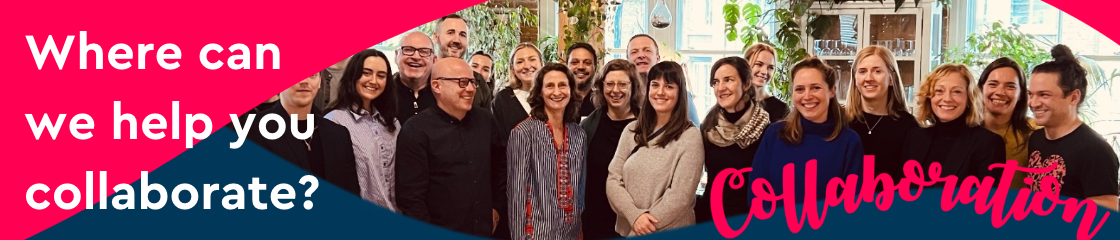
Where can we help you collaborate? This could be across a team, an organisation, a value chain or a system. Here are three case studies to explore.
Retreat and Workshops - Case Study - Aligning a European team
Engaging through play - Video - SDG Game
Community of Practice - Case Study - Sodexo
Email carl@futureplanet.love to explore how we can support you with your goals.
